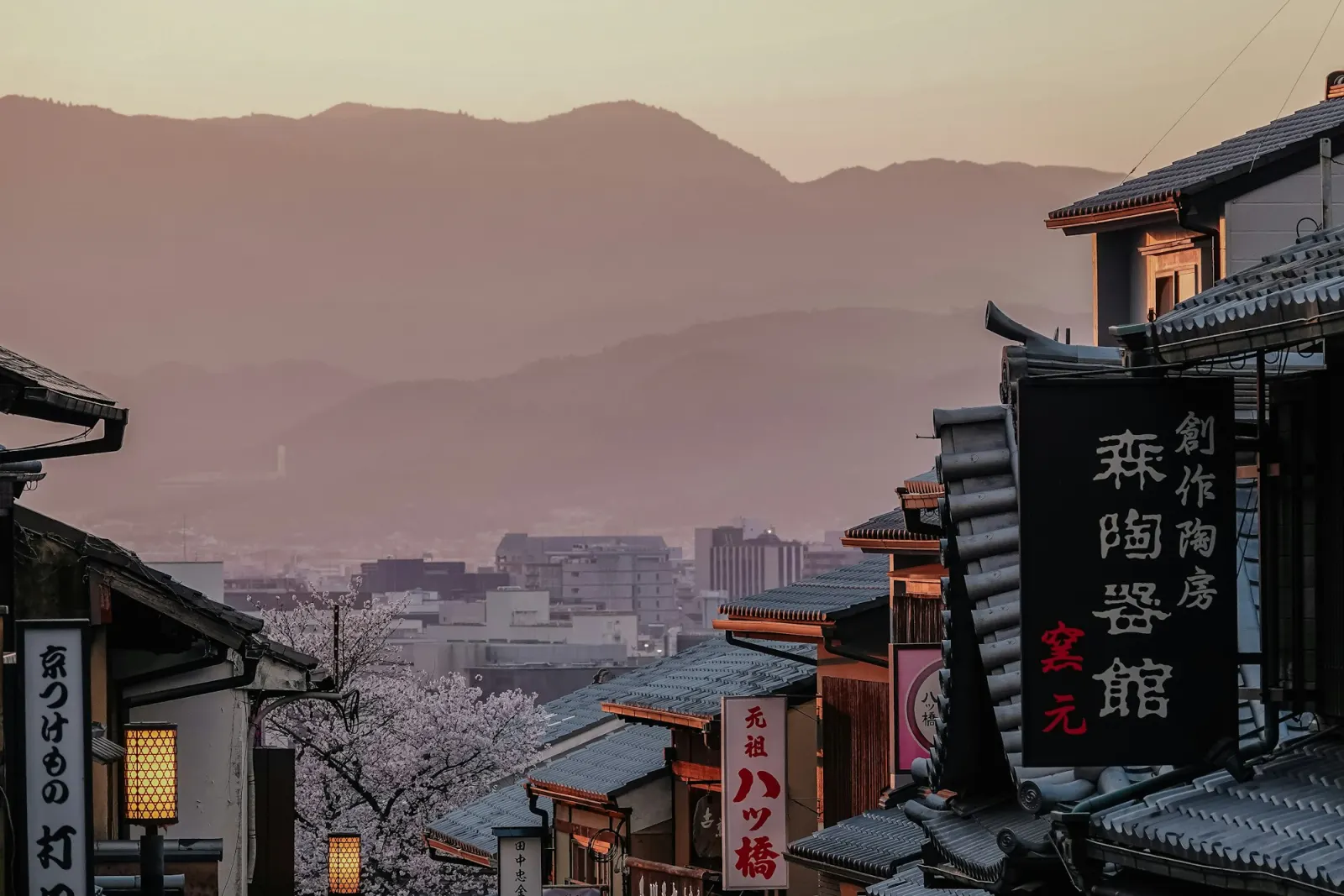
 Photo: Nathalie Lays · Unsplash
Kyoto in 3 days, timed around the crowds
One side of the city a day, starting with the temples that open at 06:00. Real bus fares, the 2026 hotel tax, Gion's alley rules and the Nara question.
Three full days is the right amount of Kyoto for a first visit, and the trick is not what you see but when. The big temples are at their best in the hour after they open and unbearable from about 10:00, so each day here starts on one side of the city at dawn and drifts inward as the coaches arrive. East on day one, north-west on day two, south on day three. Everything below runs on the ¥230 bus, the ¥220 subway and the JR line that leaves from Kyoto Station, and nothing needs a tour.
Three days is enough, if you start early
Kyoto’s sights sit in three clusters with the flat, grid-planned city between them. Higashiyama in the east holds Kiyomizu-dera, the sloping lanes below it, and Gion. Arashiyama in the north-west has the bamboo and the river, with Kinkaku-ji on the way back. Fushimi Inari and the tea town of Uji sit south along one JR line. Each cluster is a morning and an afternoon, which is why three days fits so well and two feels like a chase.
The crowd curve is the same at every one of them. Kiyomizu-dera opens at 06:00, Tenryu-ji in Arashiyama at 08:30, Kinkaku-ji at 09:00; the bamboo path has no gate at all and Fushimi Inari never closes. If you are at the first stop when it opens, the rest of the day is yours to take slowly. If you arrive at 11:00, you’ll spend it queuing behind people who did.
Base yourself between Kyoto Station and Shijo, on the Karasuma subway line. The JR trains south leave from the station and the buses east and north-west leave from both.
Day one: Kiyomizu at 06:00, then down through Higashiyama to Gion
Take bus 206 from Kyoto Station to Gojo-zaka, about 15 minutes for ¥230, then walk 10 minutes up the hill. At this hour the souvenir lanes are shuttered, which is the point. Admission is ¥500, and from the wooden stage over the valley at 06:30 you get the whole city below you and almost nobody beside you. Closing is 18:00, 18:30 in July and August, and later again during the autumn illuminations, which in 2026 run 21 to 30 Nov with entry until 21:00.
Walk back down through Sannenzaka and Ninenzaka, the two stone-stepped lanes of wooden shopfronts, while they’re opening, and you’ll reach the Yasaka Pagoda before the first groups do. Keep heading north on foot through Maruyama Park and Yasaka Shrine and you’ll land on Shijo-dori, at the top of Gion, by late morning.
Kiyomizu-dera when the doors open, the lanes while they're still shuttered, a long lunch, then Gion after dark.
Gion is for the evening. Hanamikoji, the main street south of Shijo, is public and open; the lanterns come on, the teahouses light up, and if you see a geiko or maiko on her way to an engagement, the rule is simple. Don’t follow, don’t block, and don’t photograph her. The Shirakawa canal, one street north, is quieter and prettier.
The narrow lanes running off Hanamikoji are private roads, and the residents’ council has posted signs at their mouths: no entry without permission, no photographing geiko or maiko, and a ¥10,000 (about $63) penalty for either. The no-photo signs went up in 2019; in 2024 the council asked tourists to stop entering the alleys altogether. Hanamikoji itself and the Shirakawa streets are public and unaffected. If a lane has a sign, that’s your answer.
Day two: the bamboo before 08:00, Kinkaku-ji before lunch
Take the JR Sagano Line from Kyoto Station to Saga-Arashiyama, 15 minutes for ¥240, aiming for a train before 07:30. The bamboo grove is a five-to-ten-minute walk from the station, it has no gate and no ticket, and before 08:00 you can hear it. By 09:30 it’s a slow single-file shuffle with selfie sticks. Tenryu-ji, the Zen temple whose north gate opens straight onto the bamboo path, opens at 08:30: ¥500 for the garden, ¥300 more for the buildings, and the pond garden with the hills behind it is the reason the whole area exists.
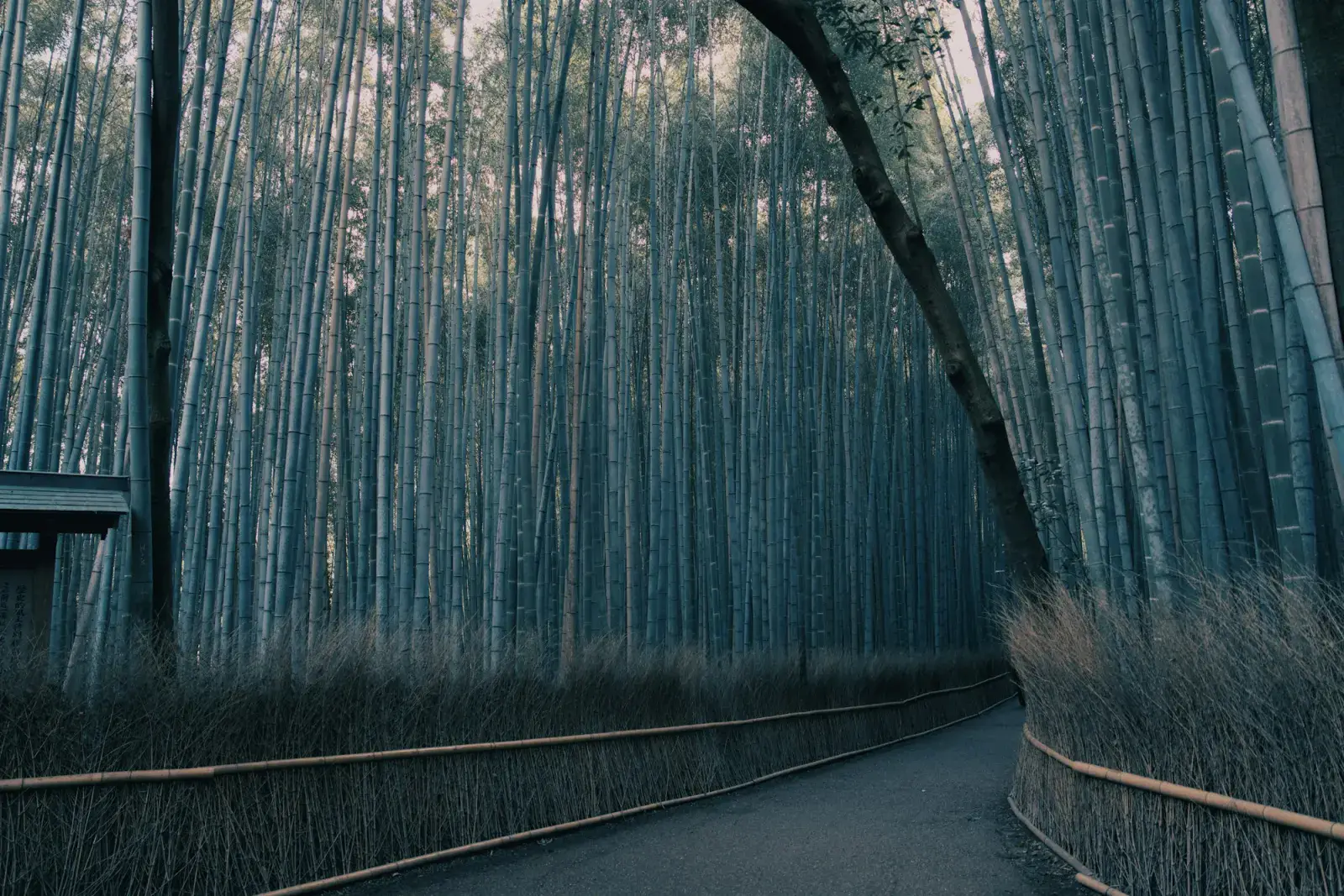
Walk down to the river and the Togetsukyo bridge, then get a bus or a taxi east to Kinkaku-ji. Bus 12, 59, 205 and M1 all stop at Kinkakuji-michi. The Golden Pavilion opens at 09:00, costs ¥500, and is a one-way loop you’ll finish in 40 minutes. It’s at its best in the first hour too, but it’s a far shorter visit than Kiyomizu, so arriving at 11:00 costs you less. Ryoan-ji, the rock garden, is a 20-minute walk or a five-minute bus west, open 08:00 to 17:00 from March to November, ¥600. Sit at the back of the veranda and wait for a lull.
Out on the 07:10 JR train, the grove before anyone else, then east across the north of the city by bus.
The mistake on this side of town is doing Kinkaku-ji first because it’s famous, then reaching the bamboo at midday. Reverse it.
If you give me your three dates I’ll put the 06:00 Kiyomizu start on whichever morning has the clearest forecast and move the bamboo to the other, because mist in the grove is fine and mist on the Kiyomizu stage is not. I’ll also check the autumn and spring illumination dates against your nights, since they change the closing time and the crowd.
Day three: Fushimi Inari at dawn, then tea in Uji or deer in Nara
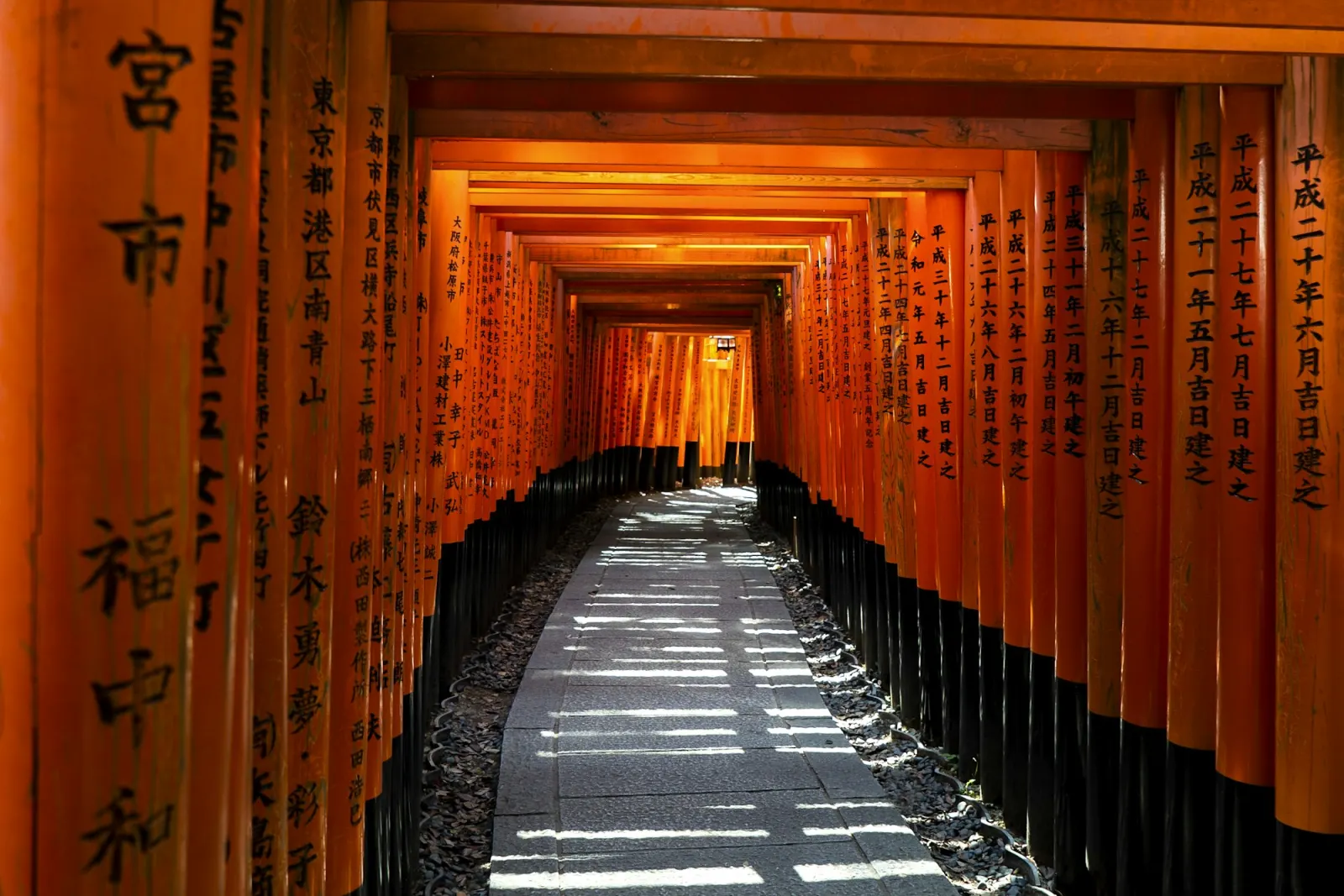
Fushimi Inari is two stops south of Kyoto Station on the JR Nara Line, five minutes for ¥150, and it never closes and never charges. The first few hundred torii gates, the stretch everyone photographs, are packed from mid-morning until dusk. At 06:30 you’ll share them with joggers. Walk up as far as the Yotsutsuji crossroads, partway up the mountain, for the view back over the city; the full loop to the summit of Inariyama and back takes two to three hours and the gates thin out after the first half hour either way.
Back at Inari station, stay on the same line south. Uji is about 15 more minutes, 20 from Kyoto Station on the rapid for ¥240, and it’s Japan’s tea town: the shopping street from the station to the river is lined with roasters and the smell of hojicha. Byodoin, whose Phoenix Hall is on the back of the ¥10 coin, opens its garden at 08:45 (¥700, which includes the museum) and runs timed tours of the hall interior every 20 minutes from 09:30 to 16:10 for ¥300 more, 35 people at a time. Buy the interior slot first, then walk the garden while you wait. A matcha and a sweet by the river rounds off the afternoon, and you’re back at Kyoto Station in 20 minutes.
If you’d rather have the Great Buddha and the deer, Nara is the same direction and a bigger day. The JR Miyakoji rapid takes 45 minutes from Kyoto Station for ¥720; the Kintetsu limited express is 35 minutes for ¥1,280 and lands you at Kintetsu Nara, a 30-minute walk through the park to Todai-ji rather than 45 from JR Nara. Todai-ji’s Daibutsuden opens at 07:30 from April to October, 08:00 the rest of the year, and costs ¥800. Do Fushimi Inari at dawn, be on a train to Nara by 09:00, and you’ll have the park before the school groups.
Bus, subway or walk: what getting around actually costs
Kyoto’s city buses are a flat ¥230 for adults and ¥120 for children anywhere in the central zone, paid as you get off, with a tap of an IC card or coins into the box. The subway has two lines, Karasuma north-south and Tozai east-west, crossing at Karasuma Oike, and fares run ¥220 to ¥360 by distance. Both take the same Suica or ICOCA card you’ve been using in Tokyo.
The pass question comes down to arithmetic. The Subway & Bus 1-Day Pass is ¥1,100 (¥550 for children) and covers city buses, Kyoto Bus, Keihan Bus and both subway lines. At ¥230 a ride, it pays off on the fifth bus of the day. On the plan above, day one is a single bus in and a walk, day two is a JR train and three or four buses, and day three is JR all day, which the pass doesn’t cover. Buy it for day two only, or not at all.
I’ll total the fares for each day as I draft it, so you can see whether a pass earns its keep before you buy one. On a typical version of this plan it’s one pass on the Arashiyama day and tapping a card on the others, and I’ll say so in the day’s notes.
Walking is the honest answer for the east side, where the bus along Higashiyama-dori spends its life in traffic. Taxis are worth it between two of you for the Arashiyama-to-Kinkaku-ji leg, which is awkward by bus.
The 2026 hotel tax, and where to sleep
Kyoto raised its accommodation tax on 1 March 2026 and now has the steepest top band in Japan. It’s charged per person per night on top of the room rate, tiered by what you pay: ¥200 under ¥6,000 a night, ¥400 from ¥6,000 to ¥19,999, ¥1,000 from ¥20,000 to ¥49,999, ¥4,000 from ¥50,000 to ¥99,999 and ¥10,000 (about $63) at ¥100,000 and above. Two people in a ¥15,000-per-person room pay ¥800 a night in tax, usually at checkout in cash or on a card, separately from the booking. Keep yen notes for the last morning. The full list of what Japan added this year, including the tripled departure tax, is in Japan costs more to visit in 2026.
As for where, Higashiyama and Gion are the atmospheric choice and the right one if you have four nights and don’t mind the bus. Arashiyama is for people who want one evening of the river without the day crowd, and then it’s a long way from everything.
Where it fits in a Japan trip
Three Kyoto days slot into a two-week Japan loop after Tokyo and before Osaka or Hiroshima. Our Tokyo guide covers the four-day shape of the capital, and Japan in two weeks shows how the pieces join. If your dates land in late April or early May, read the Golden Week post first, because every 06:00 start in this guide gets harder when the whole country is on holiday.
Tell me whether you’re coming from Tokyo or Osaka and which night you arrive, and I’ll decide which side of the city to give you first. An afternoon arrival gets Gion that evening and Kiyomizu at dawn; a late one gets the bamboo, because the 07:10 train is kinder than a 05:30 bus.
Trips others shared
Questions people ask
Is 3 days in Kyoto enough?
For a first visit, yes, if each day starts at opening time on one side of the city. Three full days covers Higashiyama and Gion, Arashiyama and Kinkaku-ji, and Fushimi Inari with either Uji or Nara. Add a fourth for Ohara or a slower Gion evening, not for more temples.
Can I do Kyoto in 3 days and 2 nights?
Only if you arrive early on the first morning and leave late on the third, which turns two nights into three full days. Pick a hotel near Kyoto Station so the first and last days aren’t spent moving luggage.
Is the Kyoto 1-day pass worth it for 3 days?
The Subway & Bus 1-Day Pass costs ¥1,100 and a bus ride costs ¥230, so it pays off on the fifth ride in one day. It doesn’t cover JR trains to Fushimi Inari, Uji, Arashiyama or Nara. Most people need it on one day at most.
Is Kyoto's 3-day itinerary doable with kids?
Yes, with the dawn starts softened to about 07:30 and one big stop per half day. Fushimi Inari’s lower gates, the bamboo grove and Nara’s deer are the three that children remember. Skip Ryoan-ji, and give Kiyomizu-dera the time it needs for the climb.
- Kiyomizu-dera, visitor guide (opens 06:00, access by bus 206 and 100 to Gojozaka), checked 30 Oct 2026
- Japan Guide, Kiyomizudera (hours to 18:00, ¥500, bus 206 15 min ¥230, autumn illumination 21 to 30 Nov 2026), checked 30 Oct 2026
- Shokoku-ji, Kinkaku-ji admission and access (09:00 to 17:00, ¥500, buses 12, 59, 205, M1), checked 30 Oct 2026
- Japan Guide, Ryoanji (08:00 to 17:00 Mar to Nov, ¥600, 20 min walk from Kinkakuji), checked 30 Oct 2026
- Tenryu-ji, admission and access (08:30 to 17:00, garden ¥500, buildings +¥300), checked 30 Oct 2026
- Japan Guide, Arashiyama (JR Sagano Line 15 min ¥240 from Kyoto Station), checked 30 Oct 2026
- Japan Guide, Fushimi Inari (always open, free, 2 to 3 hours to the summit, JR Nara Line 5 min ¥150), checked 30 Oct 2026
- Japan Guide, getting to Uji (JR Nara Line 20 min rapid, ¥240, 10 min walk to Byodoin), checked 30 Oct 2026
- Byodoin, visitor guide (garden 08:45 to 17:30, Phoenix Hall tours 09:30 to 16:10 every 20 min, ¥700 plus ¥300), checked 30 Oct 2026
- Japan Guide, getting to Nara (JR rapid 45 min ¥720, Kintetsu limited express 35 min ¥1,280), checked 30 Oct 2026
- Japan Guide, Todaiji (07:30 to 17:30 Apr to Oct, ¥800, 30 min walk from Kintetsu Nara), checked 30 Oct 2026
- Kyoto City Transportation Bureau, city bus fares (adult ¥230, child ¥120), checked 30 Oct 2026
- Kyoto City Transportation Bureau, taking the subway (adult fares ¥220 to ¥360), checked 30 Oct 2026
- Kyoto City Tourism Association, getting around in Kyoto (Subway & Bus 1-Day Pass ¥1,100, subway pass ¥800), checked 30 Oct 2026
- Kyoto City Tourism Association, accommodation tax change from 1 March 2026, checked 30 Oct 2026
- Metropolis, Japan tourist rules and fines 2026 (Gion private streets, ¥10,000 sign, Hanamikoji public), checked 30 Oct 2026
- The Star / AFP, tourists banned from private alleys in Kyoto's geisha district (7 Mar 2024), checked 30 Oct 2026
- Japan Guide, Gion (Hanamikoji, Shirakawa, no-entry and no-photography signs), checked 30 Oct 2026
- Wise, USD to JPY mid-market rate (¥157.6 per dollar), checked 30 Oct 2026
Three days in Kyoto, drafted around opening hours in about a minute.
Lez takes this guide, your dates and your pace, and puts the early starts where the weather and the crowds say they should go.
“Plan me 3 days in Kyoto, one side of the city a day, early starts to beat the crowds, with a half day in Uji”Ask Lez →