 Photo: RE Walsh · Unsplash
 Tasmania in ten days, a loop that doesn't double back
Hobart to Cradle Mountain the long way round, with the park passes, the Bruny ferry and the MONA days that catch people out, and why ten days beats a week.
Tasmania looks small on the map and drives like a country. The loop that works is Hobart, the Tasman Peninsula, the east coast, the north-east, Launceston and Cradle Mountain, then back down the middle. Ten days does it without a single day that’s all car. Seven days does it only if you cut the north-east, which is the bit you’ll wish you’d seen.
The loop, and which way round
Go clockwise. Hobart first for three nights, out to Port Arthur, up the east coast to Freycinet and the Bay of Fires, across to Launceston, up to Cradle Mountain, and back to Hobart through the Central Highlands. The long drive, Cradle to Hobart, comes at the end when you’ve nothing left to see on the way. Fly into Hobart and out of Launceston if the fares allow it, and the loop loses its last leg entirely.
The alternative is the Spirit of Tasmania, which lands you at Devonport, 90 minutes from Cradle Mountain. If you’re bringing the car from Melbourne, run the same loop anticlockwise from the north and you still finish near the boat.
Hobart’s three days
Salamanca Market runs every Saturday from 08:30 to 15:00 along the sandstone warehouses on the waterfront, and the crowd peaks at about 10:00. If you can land Hobart for a Saturday, do, and go early for the stone fruit and the scallop pies.
MONA, the museum of old and new art that David Walsh dug into a Berriedale hillside, is open Monday and Thursday to Sunday from 10:00 to 17:00 and closed Tuesdays and Wednesdays until the end of June 2027. It opened its new Elektra wing in June 2026. Book a slot, take the ferry from Brooke Street Pier (25 minutes, about $23 return, or $58 for the Posh Pit with drinks) and give it the whole day, because the galleries are underground and you’ll lose track of time.
Hobart itineraries fall apart on the calendar. MONA’s closed two weekdays, Salamanca Market is Saturday only, and the Bruny Island cruises run to weather. Fix those three first, then fill the rest. A Thursday to Sunday stay in Hobart gets all of them.
The third day is kunanyi, Mount Wellington, which stands over the city and is 30 minutes to the summit by car. Go in the morning before the cloud, and if the road’s shut for snow, which it can be in any month, the Springs halfway up is still worth the drive.
Bruny Island, as a day or a night
The SeaLink ferry from Kettering, 35 minutes south of Hobart, takes cars across in 20 minutes. Fares are per car, and passengers go free. A return for a car under six metres bought online is $55.80 at the standard rate, or $48.50 and $41.10 on the saver fares for off-peak crossings. Book a time or expect to queue at the ramp on a summer morning.
Bruny is two islands joined by a sandy isthmus called the Neck, and the lookout steps there are the photo. The south island has the Cape Bruny lighthouse, the cheese and oyster stops along the road, and the three-hour wilderness cruise from Adventure Bay under the sea cliffs, which is the best boat trip in the state and gets cancelled in a swell.
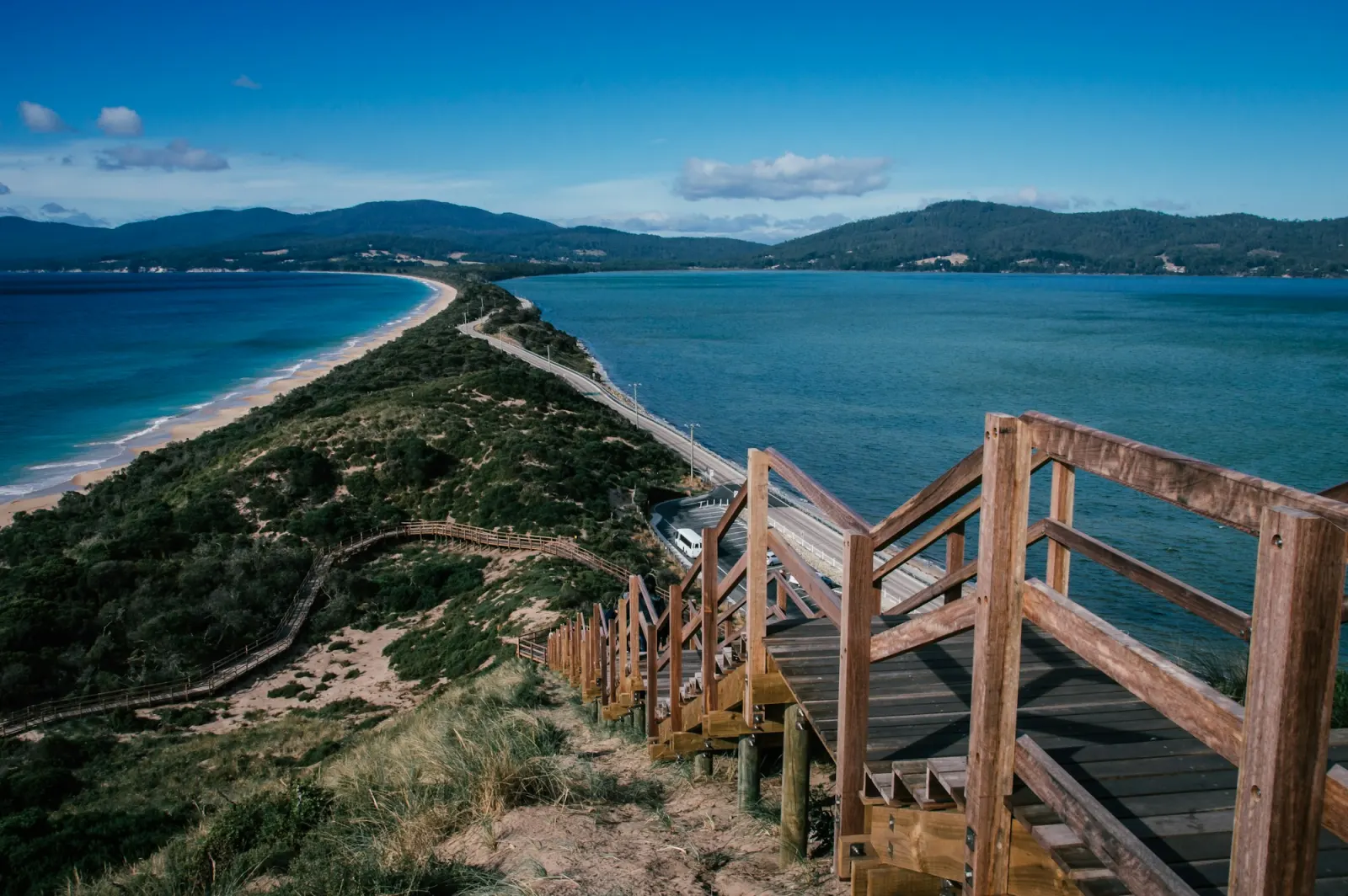
A day is enough for the Neck, the cruise and the lighthouse. A night lets you see the penguins come ashore at the Neck after dark and eat the oysters where they were grown.
Port Arthur and the Tasman Peninsula
Port Arthur is 90 minutes from Hobart and a two-day ticket, which is the clue. An adult pays $55 and a child $27.50, the site opens from 09:00 to 17:00, and the ticket includes a harbour cruise and a walking tour. It’s a convict prison in a beautiful place and the stories are heavy. Half a day is enough, and the ghost tour at night is well done if you’re staying.
Stay the night on the peninsula. The sea cliffs at Cape Hauy and Cape Raoul are the highest in Australia, the Tasman Arch and the Blowhole are on the way in, and the walk to Cape Hauy is four hours return on a good track with a view at the end that you’ll keep.
Freycinet and the east coast
Coles Bay is the base for Freycinet, and the Wineglass Bay lookout is the walk everyone does. It’s 1.3 km up a stepped gravel track and takes about an hour to 90 minutes return. Carrying on down to the beach and back makes it two to three hours and worth it, because the lookout crowd thins to nothing on the sand. Go early, since the car park fills by 10:00 in summer and the park pass is checked at the gate.
Tell me your dates and I’ll put Hobart on the days MONA and the market are open, book-end the Wineglass Bay walk with a slow morning, and make sure you’re not driving the Cradle road after dark when the wallabies come out. If you’d rather skip a leg, say which and I’ll stretch the others.
Two nights on this coast is right. The Freycinet Marine Farm sells oysters and mussels off the deck, the Friendly Beaches north of Coles Bay are empty, and the drive on to St Helens passes Bicheno’s blowhole and penguin tours.
The Bay of Fires and the north-east
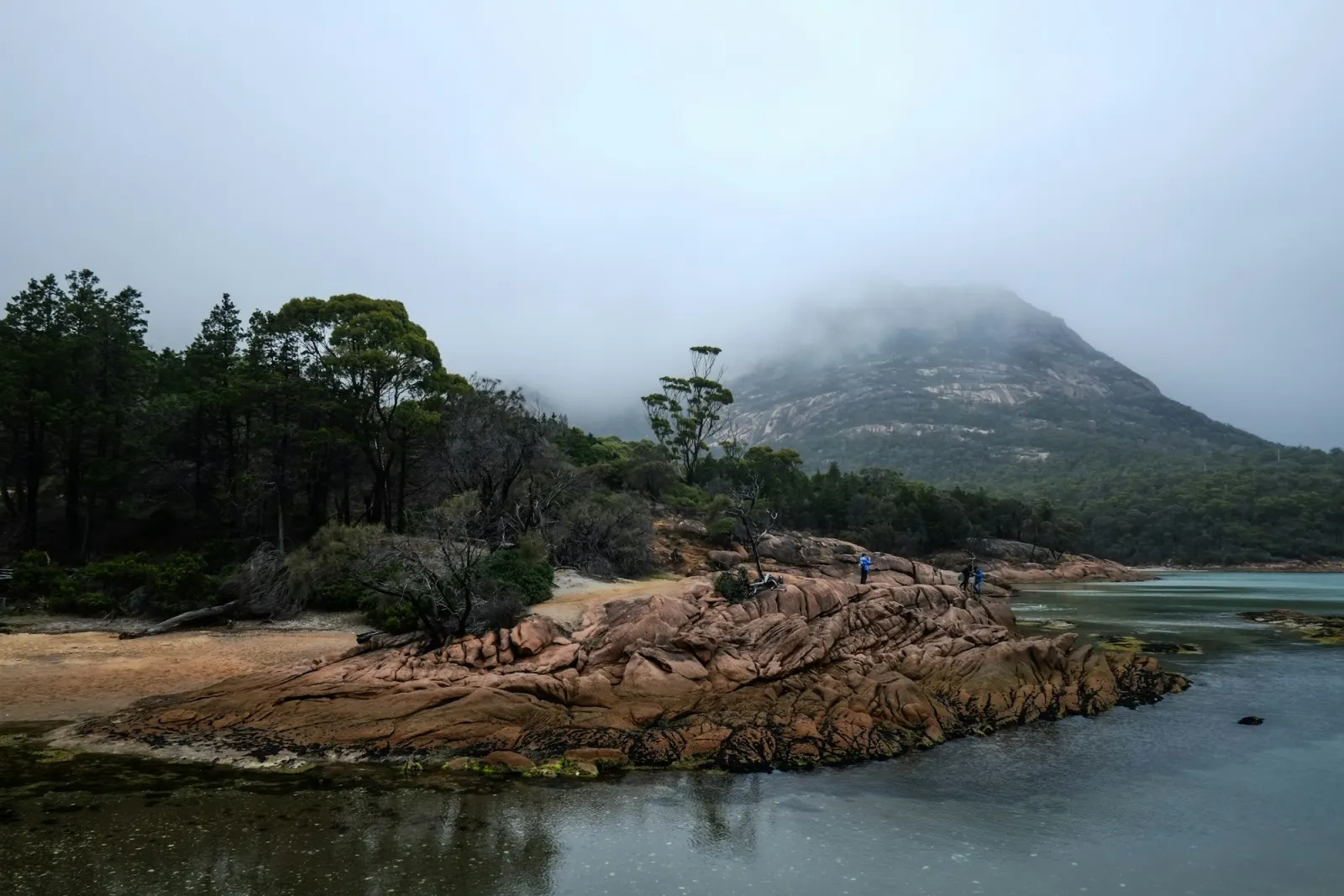
The Bay of Fires is a 50 km stretch of white beaches north of St Helens, with the orange lichen on the granite that gives it the name. Binalong Bay, 10 minutes from St Helens, is the easy one. The Gardens road beyond it has the beaches with no one on them. You can camp free along the coast or stay in St Helens and drive out.
From St Helens, head inland through Derby, the old tin town that’s now the mountain-bike capital, and the Pyengana cheese factory, to Launceston. The city is two hours away and worth a night for Cataract Gorge, a river gorge with a chairlift and swimming hole ten minutes from the main street, and the Tamar Valley vineyards north of town.
Cradle Mountain, and how the shuttle works
Cradle is two hours from Launceston. The road into the park is closed to private cars for most of the day, and a shuttle bus runs from the visitor centre to Dove Lake every 15 minutes or so. Your parks pass covers entry but not the shuttle. A 72-hour shuttle ticket is $15.50 an adult and free for children, and the Cradle day pass sold only at the visitor centre, $30.70 for an adult, includes 24 hours of shuttle.
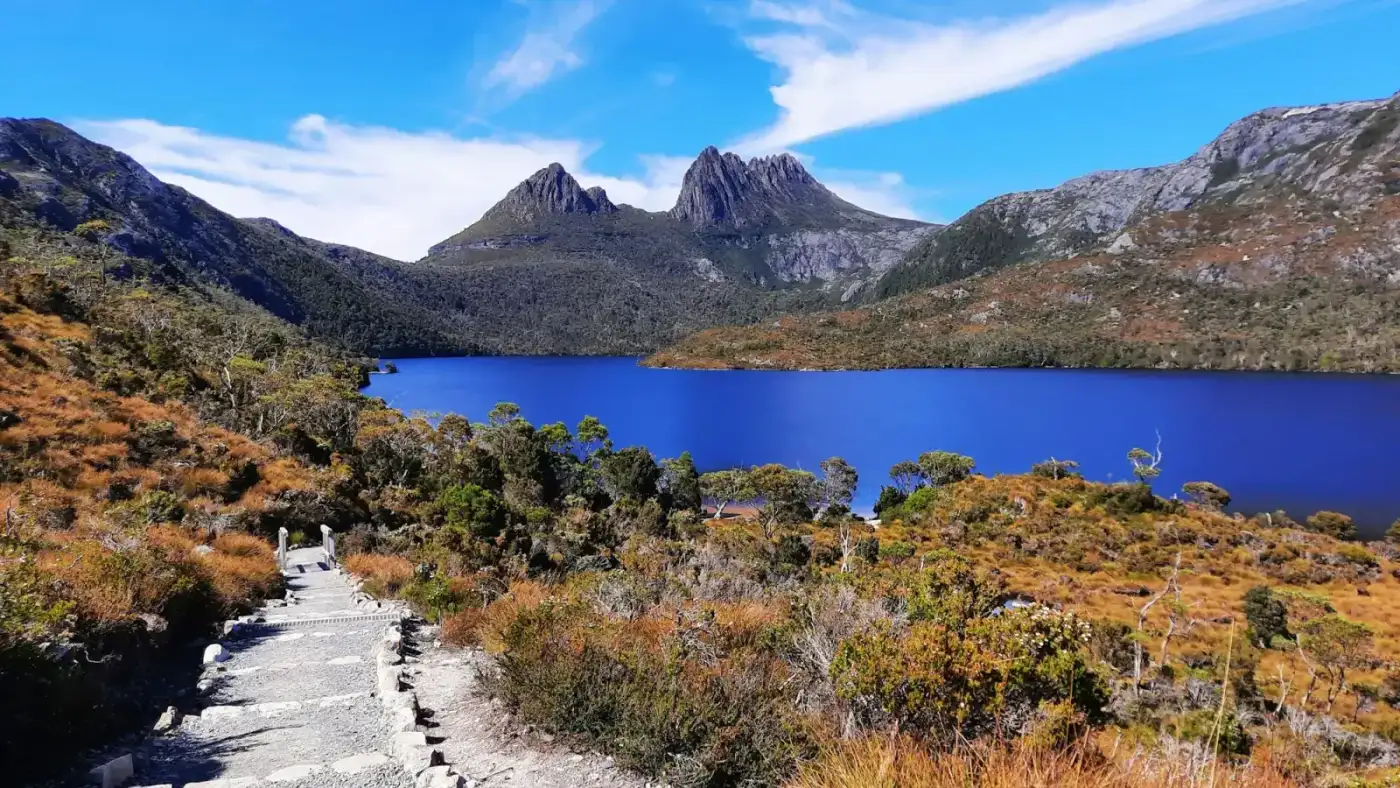
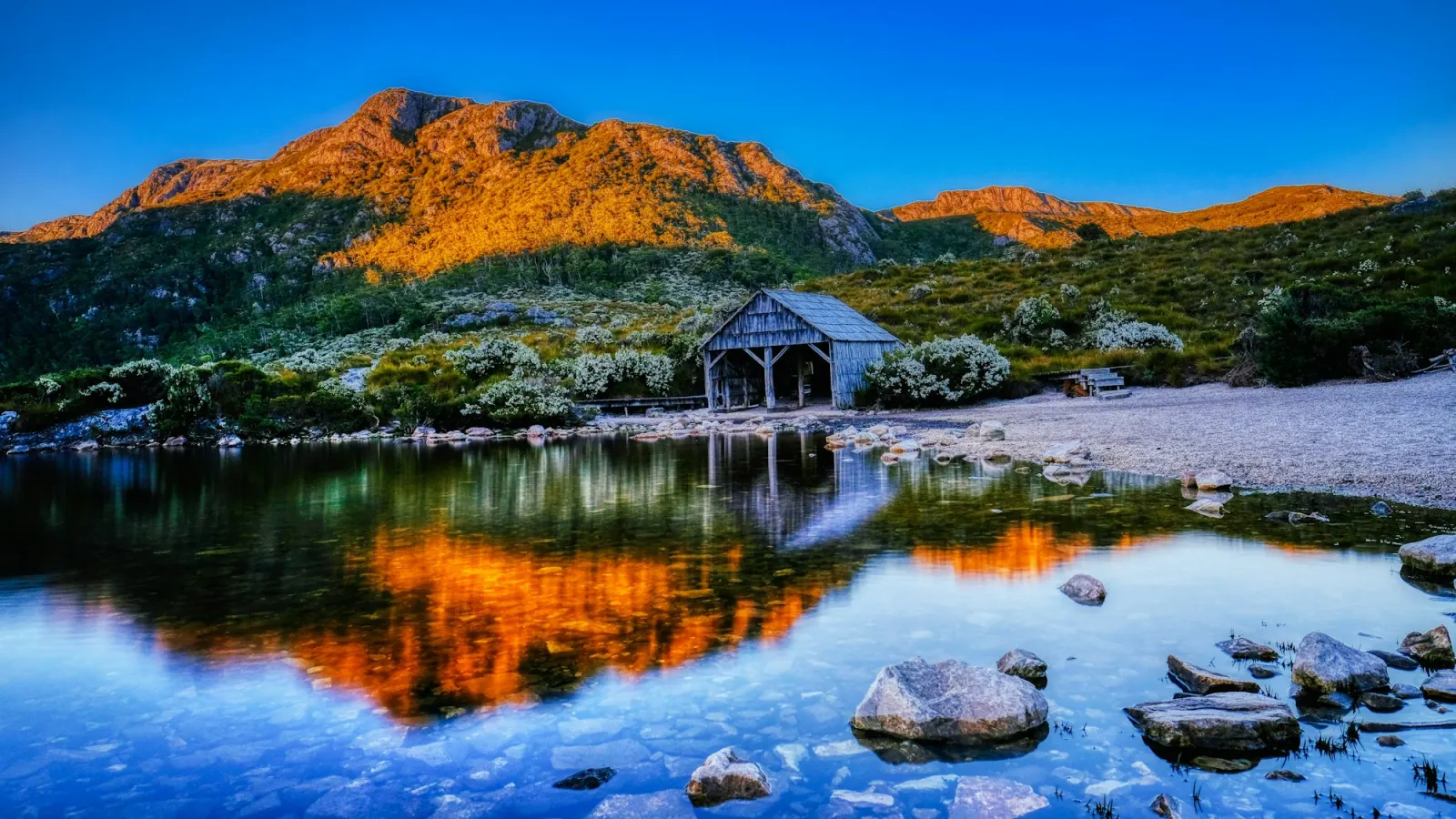
The Dove Lake circuit is 6 km, flat-ish, and two hours, with the boatshed and the mountain reflected in the water on a still morning. The walk up to Marions Lookout is the next step, steep with chains, two to three hours return, and it’s the view of the lake you’ve seen in the photos. Beyond that is the Overland Track, and that’s a different trip.
First shuttle in, the lake circuit while it's still, the lookout if the cloud lifts, and a wombat on the walk back.
Cradle’s weather changes by the hour in any season. Pack a rain shell and a warm layer in February and expect to use both. Two nights here is the right number, so that a wet first day can be a dry second one.
Passes, ferries and the money
Buy the Holiday Pass. It’s $98.35 per car for two months and covers everyone in it at every national park: Freycinet, the Bay of Fires camps, Mount Field, Cradle, the lot. A single day pass is $49.15, so the holiday pass pays for itself at the second park. Buy it online or at the first visitor centre, and hang it on the mirror.
The Cradle Mountain day pass at the visitor centre includes the shuttle and is the only pass that does. If you’ve already got the Holiday Pass, you still buy the $15.50 shuttle ticket on top. People argue about this at the counter every morning. It’s just how it works.
The Spirit of Tasmania runs Geelong to Devonport, overnight year-round and by day between September and April. Passenger fares start around $100 each way without a car. A couple with a standard car and a cabin should expect somewhere between $700 and $1,500 return depending on the season, and the fuel surcharge that went on in March 2026 was dropped in September. The new, larger ships are entering service at Devonport through late 2026, so check the sailing dates when you book.
Fuel is dearer than the mainland and the stations are far apart in the north-east and the highlands. Fill up in St Helens, Launceston and Cradle, and don’t do the Derwent Bridge road on a quarter tank.
The mistakes people make
The first is driving at dusk. Tasmania’s roads are lined with wildlife from an hour before sunset, and a wallaby through a windscreen ends a trip. Plan to arrive everywhere by late afternoon.
The second is a week. Seven days means the east coast or the north-west, not both, and most people do the east and spend the flight home looking at Cradle Mountain on someone else’s phone.
The third is Cradle for one night. Give it two, so the weather has a second chance.
Trips others shared
Questions people ask
How many days do you need for a Tasmania road trip?
Ten days for the full loop of Hobart, the Tasman Peninsula, the east coast, the north-east, Launceston and Cradle Mountain without a day that’s all driving. Seven days means choosing the east coast or the north-west. Two weeks adds the west coast and Strahan.
Do I need a parks pass in Tasmania?
Yes, for Freycinet, Cradle Mountain, Mount Field, the Tasman peninsula capes and the Bay of Fires camps. The two-month Holiday Pass is $98.35 per vehicle and covers everyone in the car. The Cradle Mountain shuttle is a separate $15.50 ticket unless you buy the Cradle day pass at the visitor centre.
Is MONA open every day?
No. MONA is open Monday and Thursday to Sunday, 10:00 to 17:00, and closed on Tuesdays and Wednesdays until at least 30 Jun 2027. Book a time slot and the ferry ahead.
Should I take the Spirit of Tasmania or fly?
Fly if you’re hiring a car anyway; Hobart in and Launceston out drops the last leg of the loop. Take the Spirit if you want your own car or you’re camping, and run the loop from Devonport instead.
Ten days around Tasmania, drafted in about a minute.
Lez takes this guide, your dates and how you like to travel, and lines Hobart up with the days things are open.
“Plan me 10 days driving around Tasmania from Hobart in February, MONA, Bruny Island, Freycinet, Bay of Fires and Cradle Mountain”Ask Lez →