 Photo: ayumi kubo · Unsplash
 Oaxaca for Day of the Dead, planned around the real nights
Which night is which, from the marigold markets to the Xoxocotlán vigil, how to be in a cemetery without being a tourist in someone's grief, and what to do with the days in between.
Day of the Dead in Oaxaca is three nights, not one, and none of them is Halloween. The city’s big parade is usually a few days before, the famous cemetery vigil at Xoxocotlán is the night of 31 Oct, and the villages each have their own night through to 2 Nov. Plan to arrive by 28 Oct, book the room now for next year, and build the days so the nights are free.
The nights that matter
The dates below are the pattern of the last several years. The state publishes the official programme in mid-October, late enough that the rooms are long gone, so plan on the pattern and check the final times when you land.
From about 28 Oct the two central markets fill with cempasúchil, the orange marigolds, and the sugar skulls, pan de muerto and copal that go on the altars. Walk Mercado de Abastos that first day. It’s the biggest market in southern Mexico and it looks like a flower farm for the week.
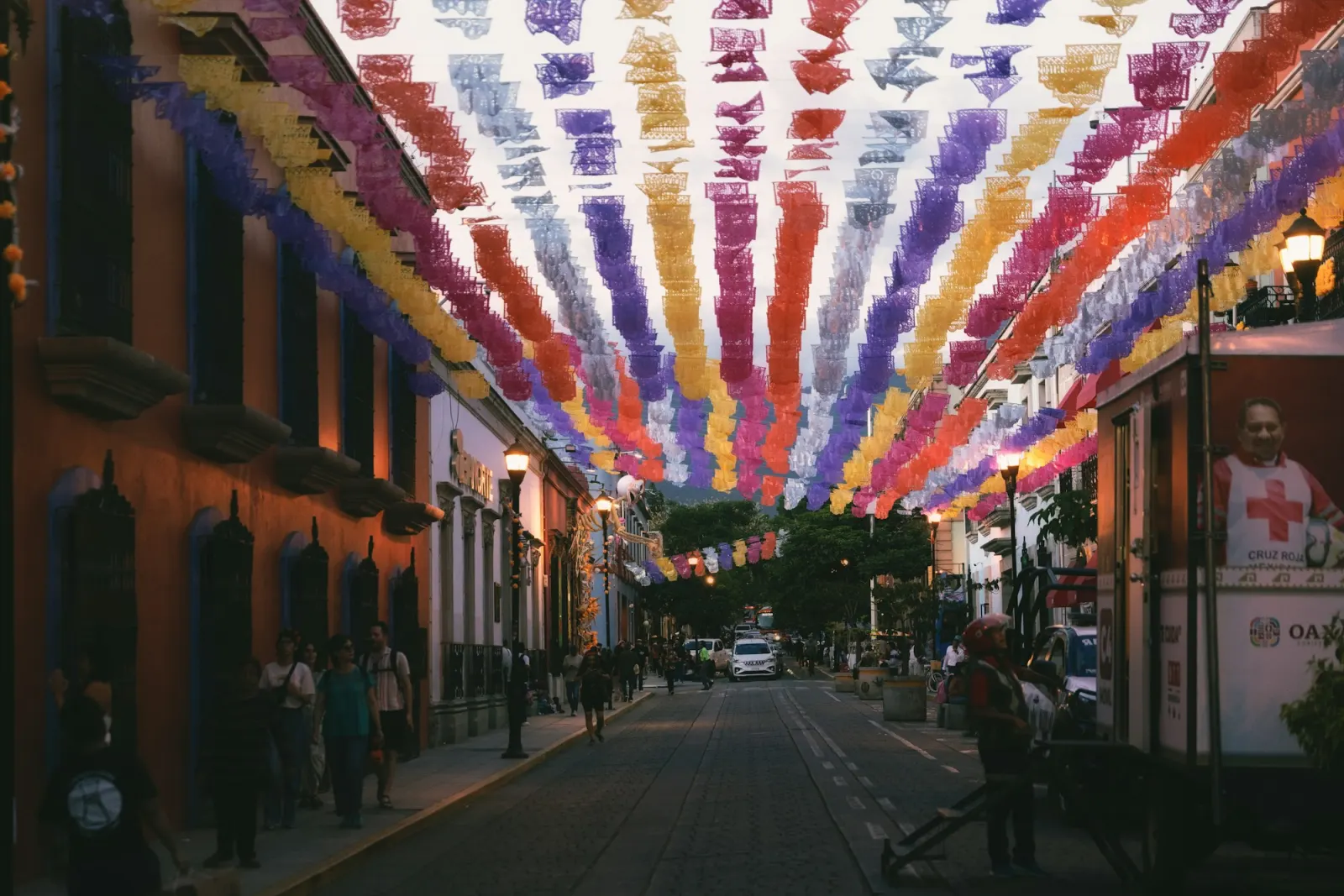
The city’s Magna Comparsa, a parade of forty or more neighbourhood troupes with brass bands and giant puppets, runs from the Fuente de las Ocho Regiones down through the centre to the Alameda de León. In recent years it’s been on 30 Oct, though the date moves. The Comparsa de Catrinas, the costumed walk through the Centro, has been on 1 Nov in the late afternoon.
The night of 31 Oct is the panteón at Santa Cruz Xoxocotlán, 10 km south of the city, where families sit up all night at the graves with candles, flowers, food and music. Santa María Atzompa’s cemetery holds its vigil the same night and is smaller. On 1 Nov the villages of the Etla valley run their muerteadas, which are closer to a travelling play than a parade, with a dead man, a widow, a devil and a priest, and brass bands that go until dawn. Teotitlán del Valle, the weaving village, keeps its cemetery night for 2 Nov. San Felipe del Agua, on the city’s north edge, is the quiet one, also on 2 Nov.
Oaxaca’s centre sells out for this week six months or more ahead, and what’s left costs three or four times the usual rate. If you’re reading this for the 2027 festival, book a cancellable room in the Centro, Jalatlaco or Xochimilco neighbourhoods before you do anything else. If you’ve left it late, Oaxaca’s suburbs and the villages on the Mitla road have guesthouses, and a taxi into town is cheap.
The cemetery night, done properly
Xoxocotlán has two cemeteries, the old one by the church and the new one across the road, and both are open all night on 31 Oct. The families arrive after dark, the candles go on by about 21:00, and the atmosphere peaks between 22:00 and 01:00. Go late rather than early. Take a taxi or a colectivo from the city, agree the fare before you get in, and expect to walk the last stretch because the streets around the cemetery close.
This is a vigil, not a show. Families are there for their dead, and most are glad you came, and some aren’t. Walk slowly, keep your voice down, don’t step on the graves, and ask before you point a camera at anyone’s altar. Flash is rude. Buying a bag of marigolds or a candle from the sellers at the gate, and putting them where someone invites you to, is the right way to join in.

If a big crowd in a cemetery isn’t what you want, Atzompa the same night is a fraction of the size, and San Felipe del Agua on 2 Nov is a village churchyard with candles and almost no visitors. The feeling is the same. The elbows aren’t.
Tell me your dates and whether you want the big nights or the quiet ones, and I’ll put the Xoxocotlán vigil, the Etla muerteada and a village cemetery on separate evenings with Monte Albán and the markets in the mornings. I’ll keep the day after each late night short.
A sample night and the day before it
The shape that works is a slow morning, something out of town until mid-afternoon, a siesta, dinner at 19:00 and the night from 21:00. You’ll be awake until 02:00 on at least two nights, and the mornings have to be gentle on purpose.
Flowers and bread at Abastos, a late lunch, the room until dusk, then the cemetery when the candles are lit.
The days between the nights
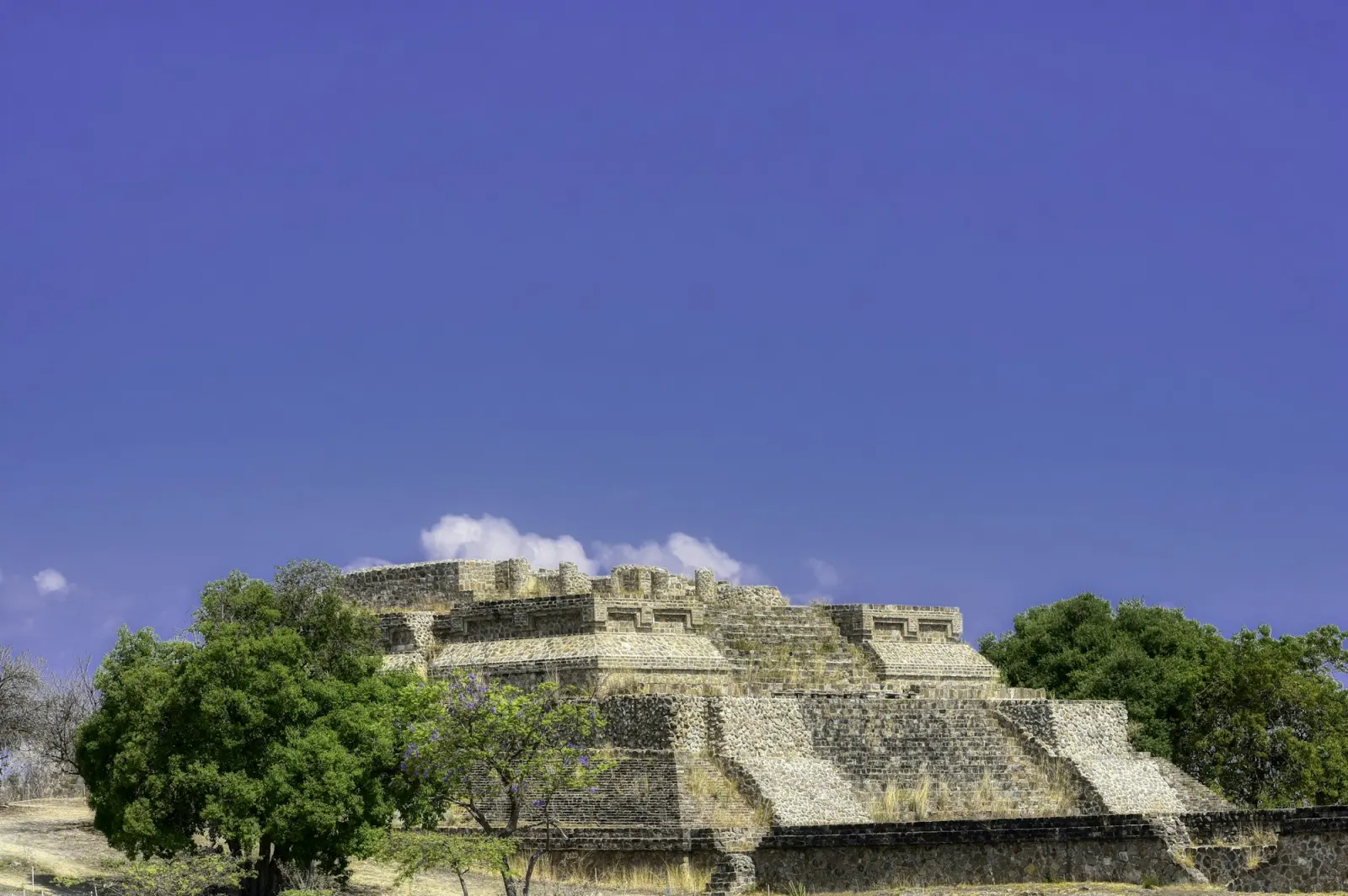
Monte Albán is the Zapotec city on the hill above town, and it opens at 08:00. Be there then, before the heat and the tour buses, and you’ll have the Gran Plaza nearly to yourself for an hour. Foreign visitors pay MXN 210 and nationals 105, cash, at the booth. Last entry is mid-afternoon. A taxi up is 15 minutes from the Centro, and the shuttle vans from Hotel Rivera del Ángel are cheaper.
The Mitla road east of the city has the rest. Teotitlán del Valle for the rug weavers, whose workshops you can visit any day of the week. Santiago Matatlán for mezcal, where the palenques along the main road will walk you through the pit oven and the horse-drawn stone and pour you four kinds. Mitla itself for the Zapotec stonework. A driver for the day costs less than three separate tours and goes where you want.
Hierve el Agua, the mineral terraces that look like a frozen waterfall, is at the end of that road, about 90 minutes out. Entry is roughly MXN 50 to 110 plus a small road fee, and the colectivo trucks from Mitla run when full. The site closes without warning when the two communities that run it fall out, so ask in town the day before rather than driving out to a locked gate.

In town, eat. Oaxaca has seven moles and you should try at least three, and the tlayudas at Mercado 20 de Noviembre’s smoke hall are the cheap lunch. The pan de muerto here is a round, slightly orange-scented bread with a little sugar face on top, and every bakery does its own.
Getting there and getting around
Oaxaca’s airport is 9 km south of the centre, close to Xoxocotlán. The official transport booth in arrivals sells colectivo seats for about MXN 135 to the centre and private taxis for MXN 350 to 500. Buy inside, not from the drivers outside. Uber works in the city and is patchy at the airport.
From Mexico City, ADO buses take six and a half to seven hours from the TAPO terminal, several times a day, and the overnight services are comfortable and cheap. Flights are an hour.
The Centro is small and flat and you’ll walk it. For the villages, a taxi driver you like on day one becomes your driver for the week. Agree a day rate, in pesos, for the Mitla road and for the cemetery nights, and have them wait. The last taxi out of Xoxocotlán at 01:00 is a worse deal than the one that’s parked round the corner.
Bring cash. Markets, cemeteries, flower sellers, colectivos and most of the mezcal palenques take pesos only, and the ATMs in the Centro run short this week.
The mistakes people make
The first is landing on 31 Oct. The markets, the parade and the altars going up are half the festival, and the big nights are better after a few days of watching the city get ready.
The second is treating the cemetery like a street party. Costumes and face paint belong at the comparsas. At the graves, dress normally, keep the phone down, and let the family be the point.
The third is a tour for everything. The parades and the markets need nobody. A driver gets you to the villages. Save the guided night for Xoxocotlán if you want someone to explain what you’re seeing.
Trips others shared
Questions people ask
What are the dates for Day of the Dead in Oaxaca?
The core days are 31 Oct to 2 Nov every year. Oaxaca starts earlier, with the markets full of marigolds from about 28 Oct and the city parade in the last days of October. The Xoxocotlán cemetery vigil is the night of 31 Oct, the Etla valley muerteadas are 1 Nov and Teotitlán del Valle’s cemetery night is 2 Nov.
How far ahead should I book Oaxaca for Day of the Dead?
Six months or more for a room in the centre. The city sells out and prices multiply. Book something cancellable as soon as your dates are likely.
Can tourists go to the cemeteries?
Yes, and families mostly welcome respectful visitors. Go after 21:00, dress normally, don’t walk on graves, ask before photographing anyone, and skip the flash. Buying flowers or candles at the gate is a good way to take part.
Is Hierve el Agua open?
Usually, but it closes without notice during disputes between the communities that manage it. Ask in Oaxaca the day before you go rather than relying on a website.
A week in Oaxaca for Day of the Dead, drafted in about a minute.
Lez takes this guide, your dates and how you like to travel, and keeps the late nights apart.
“Plan me 6 days in Oaxaca for Day of the Dead, the Xoxocotlán vigil, a village cemetery and Monte Albán”Ask Lez →