Northern lights 2027: past the peak, still worth the trip
Solar cycle 25 peaked in 2024 and is fading slowly. What NOAA's numbers mean for 2027, the new-moon dates, and which cloudy places still pay off.
The sun is past its peak, and 2027 will have fewer northern lights storms than 2024 did. It will still be a better-than-average year. NOAA’s forecast has the sunspot count easing from about 88 in early 2027 to about 61 by December, still well above the 2019 minimum, and the far-north towns that sell aurora trips do not need a big storm to deliver. What decides your trip is cloud and moonlight, not the solar cycle.
Here is what the numbers say, which nights in December to March are dark, and how the places people actually book compare on cloud.
Northern lights predictions for 2027: the sun is fading, slowly
Solar Cycle 25 began with a minimum in December 2019. On 15 Oct 2024, NASA and NOAA announced that the sun had entered its solar maximum period. NOAA’s Elsayed Talaat said at the time that this did not mean the peak had arrived, and that the exact month of peak activity would only be identified months or years later.
The record now answers it. In NOAA’s Space Weather Prediction Center data, the smoothed sunspot number peaked at 160.9 in October 2024, then began to slide: 146 in January 2025, 104 in January 2026, and 94 in March 2026, the last month with a smoothed figure. The monthly average for September 2026 was 60.3, the lowest monthly figure since January 2022.
Smoothed sunspot number, Solar Cycle 25
Half-yearly points. Labels ending in p are NOAA SWPC predictions, the rest are observed. Higher means a more active sun.
NOAA Space Weather Prediction Center, observed and predicted solar cycle indices, checked 30 Oct 2026.
So the sun in the 2026-27 season is roughly where it was in mid-2022, and in the 2027-28 season it is closer to early 2022. Both are far busier than 2019, when the cycle began. NOAA’s prediction is a smoothed average and revised monthly, and individual storms do not follow it.
A fading cycle still throws big storms
Fewer sunspots means fewer storms, not none. NASA’s October 2024 announcement noted that storms are less frequent in the declining phase, but that scientists “often see fairly significant storms” in it. The strongest geomagnetic storm in two decades, in May 2024, came in the run-up to the peak, so the biggest displays are not reserved for the maximum.
What a quieter sun changes is the odds of a display at low latitudes. A storm strong enough to put the lights over the northern United States or central Europe is rarer as the cycle fades. Nothing about that matters if you are standing in the auroral zone, where the lights are routine. The Finnish Meteorological Institute puts Rovaniemi at an auroral night every second night, and says that in the far north of Lapland the sky lights up on up to three clear nights in four.
I’d stop trying to time a storm. Nobody can name a big night months ahead, and the cycle only changes how often the lights climb south. If you give me your dates and a town, I’ll build the evenings around dark hours and keep a spare night in the plan for cloud.
The dark-sky window, month by month, with the moon
The season is set by darkness, not by the sun. Visit Tromsø gives late August to early April for Norway, Explore Fairbanks gives 21 Aug to 21 Apr, and Visit Rovaniemi says late August until early April. Visit Norway adds that, statistically, March and April and September and October have the highest aurora activity, and Visit Finland names September to October and February to March as peaks, around the equinoxes.
For a winter trip, the moon is the variable you can control. A full moon washes out faint displays and a new moon gives the darkest sky. These dates come from the US Naval Observatory, in Universal Time, so the local date can shift by a day.
| Month | New moon (UT) | Full moon (UT) | Dark-sky window |
|---|---|---|---|
| Dec 2026 | 9 Dec, 00:52 | 24 Dec, 01:28 | About 2 to 16 Dec |
| Jan 2027 | 7 Jan, 20:24 | 22 Jan, 12:17 | About 1 to 14 Jan |
| Feb 2027 | 6 Feb, 15:56 | 20 Feb, 23:23 | About 30 Jan to 13 Feb |
| Mar 2027 | 8 Mar, 09:29 | 22 Mar, 10:44 | About 1 to 15 Mar |
The best-looking combination is early March 2027: new moon on 8 Mar and the spring equinox just ahead. Rovaniemi’s March daylight averages 12 hours, so the dark is shorter, but the sky is at its blackest. Dates around the 24 Dec full moon, Christmas week, are the worst of the winter season for faint lights, and a bright moon also lights the snow, which some photographers like.
The window is a rule of thumb, set as a week either side of each new moon. It is our arithmetic from the USNO dates, not an official figure.
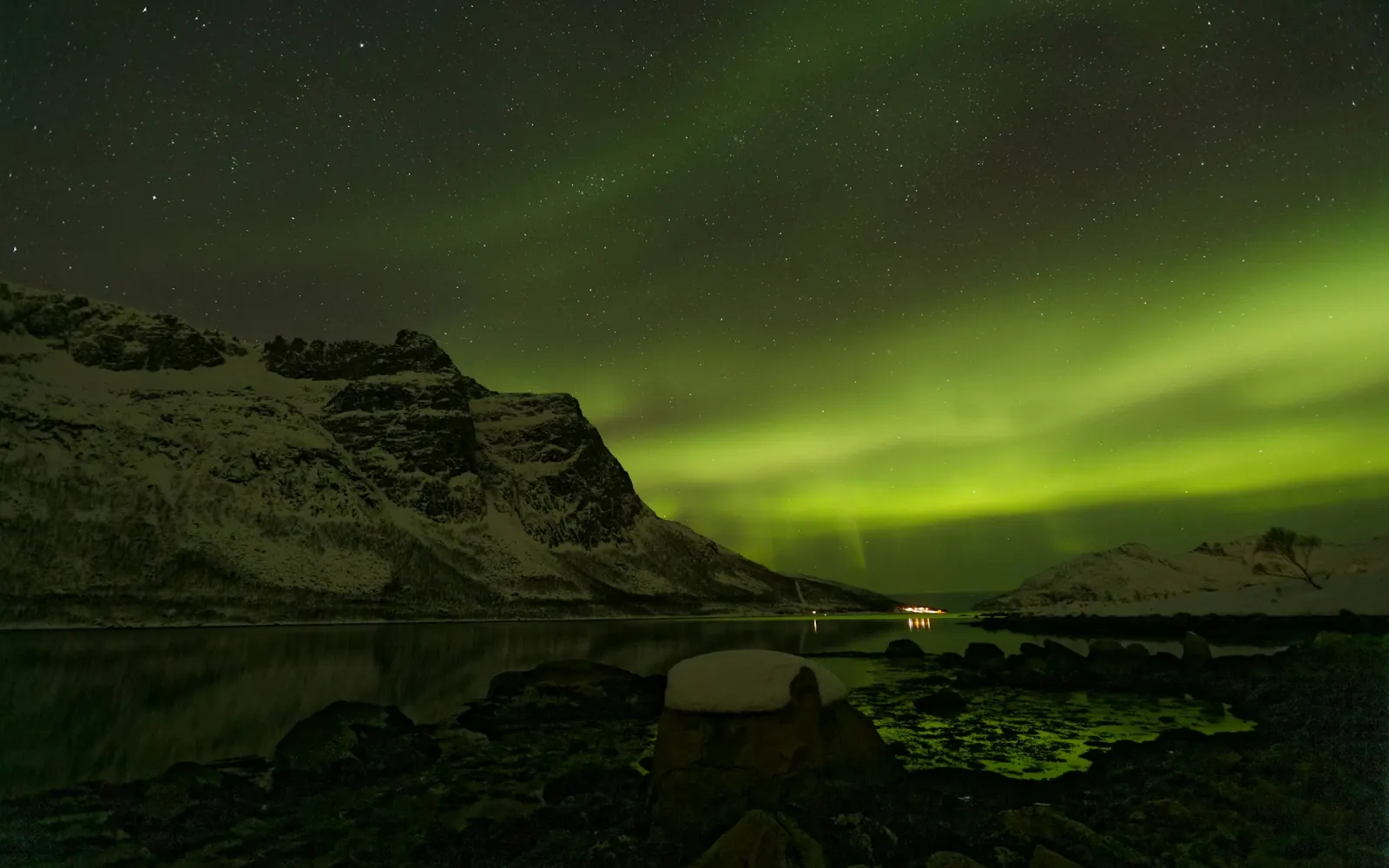
Where it pays: cloud is the real gamble
A good solar year cannot fix an overcast sky, which is why the useful comparison between destinations is cloud and distance, not who has the best slogan. Most “nights per year” figures below come from tourist boards and operators, so read them as marketing unless they say otherwise.
Abisko, Sweden: the rain-shadow bet
Abisko is the destination built on a cloud claim. The Swedish Tourist Association says a local weather effect, the “blue hole”, often leaves skies clear when the surrounding area is cloudy. Its Aurora Sky Station sits at the top of an open two-seat chairlift, and the lights can be seen from late August to April, with the best chances from mid-November to mid-March. The chairlift ticket starts at 260 SEK and a guided night visit at 1,295 SEK.
The station’s page gives no clear-sky percentage to back up the blue hole, so treat it as a reasonable local advantage, not a guarantee. It is also a long way from anywhere. If you are building the Europe leg by rail, our night trains piece covers the Berlin to Stockholm sleepers, with RDC bookable for travel from 14 Dec 2026.
Tromsø, Norway: easy, and busy
Tromsø sits within the auroral zone, has direct international flights, and is the default Norwegian answer. Visit Norway’s own advice is that it gets very busy in winter, and it suggests autumn or nearby Alta, Lyngen and Senja as alternatives. Visit Tromsø says clear skies and darkness are essential, and the lights are never a sure thing.
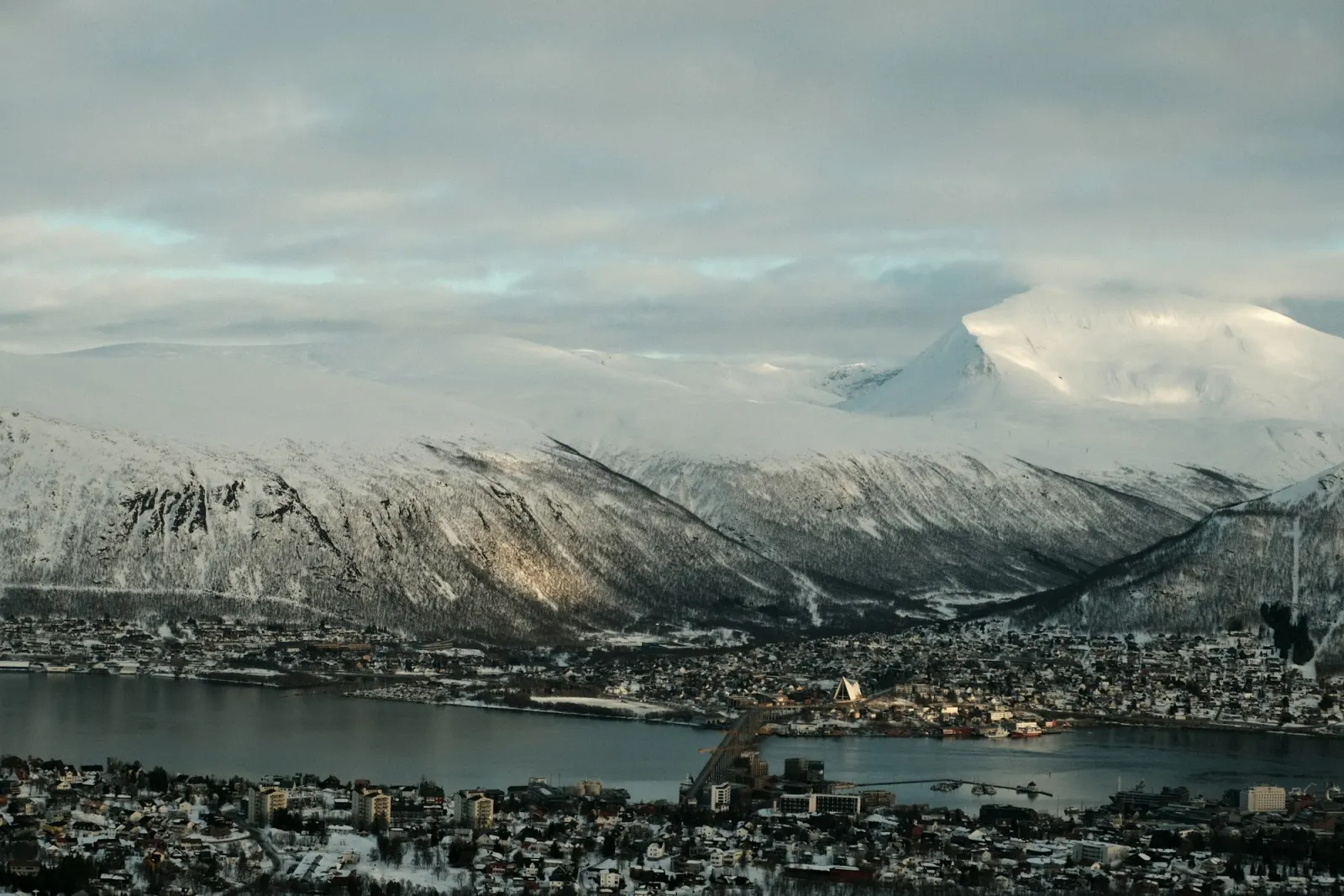
Rovaniemi, Finland: the family option
Rovaniemi runs from late August to early April, with an FMI figure of an auroral night every second night. Visit Rovaniemi gives average winter daylight of 2.5 hours in December, 4 hours in January, 8 hours in February and 12 hours in March, so the long dark is a December and January feature. It is the easiest place on the list for a trip that also needs to work for children.
Fairbanks and Yellowknife: the North American pair
Fairbanks sits directly under the auroral oval, and Explore Fairbanks runs the season from 21 Aug to 21 Apr. Its claim of more than 90% for a stay of at least three nights, out in the evening hours, is a tourism-board figure without a cited source. Treat it as “good odds”, and plan a fourth night.
Yellowknife is Destination Canada’s pick for the best odds in North America. It lists a fall window of mid-August to late September and a winter window from mid-November to early April. The cloudy gap in between, from early October to mid-November, is the one to skip. Late February and March are the best months for first-timers, helped by stronger geomagnetic activity around the spring equinox, and Destination Canada recommends at least four nights as a buffer against bad weather. It quotes up to 240 aurora nights a year, which is a ceiling, not a forecast.
Churchill, Manitoba: the cold and remote one
Travel Manitoba says the lights can appear up to 300 nights a year, with the best viewing from January to March. Churchill is more than 1,000 km from Winnipeg, with no road in, so it is a train or flight commitment. In October and early November the polar bears gather on Hudson Bay and the nights are dark, but Travel Manitoba warns that cloud can block the sky. January to March is the aurora window, and the bears are out on the ice by then.
Iceland: the odds are about cloud, not the north
Iceland suits a mixed trip, and the weather is the catch. Guide to Iceland analysed Icelandic Met Office cloud records from 1937 to 2026, and it found that the usual advice to head north does not hold. Cloud cover through the September to April aurora season averages 68% at Djúpivogur on the southeast coast, the clearest station, against 72% in Reykjavík, 77% at Akureyri and 83% in the Westfjords. These are averages of monthly observer readings, so they show odds, not how many nights will be clear.
| Station, Sep to Apr | Average cloud cover |
|---|---|
| Djúpivogur (southeast) | About 68% |
| Kirkjubæjarklaustur (south) | About 69% |
| Mývatn (north) | About 71% |
| Reykjavík | About 72% |
| Akureyri | About 77% |
| Westfjords | About 83% |
The practical reading is to stay mobile. A base on the south coast with a rental car lets you drive to whichever patch is clear, and the Ring Road itinerary shows the driving hours, while the Iceland cost breakdown has the budget.
Plan four nights, and chase the gap in the cloud
Every source that gives a number here points the same way: allow three or four nights. Fairbanks says three, Destination Canada says at least four, and the cloud statistics from Iceland explain why. One clear night in four is a normal outcome in a cloudy place, so a single-night booking is a coin toss.
Late February to mid-March and September to October are the equinox peaks. December and January have the longest dark and the coldest weather.
Use the table above. A week either side of the new moon is the darkest part of the month.
A single base with a car or a tour operator who moves you toward clear sky beats changing hotels.
Arrive, check the cloud forecast, and do your daytime activity first. Aurora nights are the ones the forecast says are clear.
We would book a fourth night before we booked a better hotel. Nothing else on this page raises your odds as cheaply.
Tell me where you’re leaving from, which month suits you, and I’ll compare two or three bases for you on flight time and daylight, and shape each evening around the dark hours. Aurora nights stay free in the plan, so a clear forecast always wins over a tour you booked.
A last note on dates. Everything above is checked as of 30 Oct 2026, and NOAA revises its sunspot prediction every month, so the 2027 figures will move. If your 2027 plan is warm instead, our Thailand arrival card and visa guide covers the rules.
Will the northern lights be good in 2027?
Good, but past the peak. NOAA’s prediction has the smoothed sunspot count near 88 in early 2027, down from 161 at the October 2024 peak, and still far above the 2019 minimum. In the auroral zone that is plenty, and in Finland FMI counts an auroral night every second night at Rovaniemi.
Where is the best place to see the northern lights in 2027?
Anywhere in the auroral zone with clear skies, which means Abisko, Tromsø, Rovaniemi, Fairbanks and Yellowknife as the main options. Cloud decides more than latitude, so choose the place where you can stay four nights and move if the sky closes.
What month is best for the northern lights?
February to mid-March and September to October are the equinox peaks, according to Visit Finland and Visit Norway. Pick the week around a new moon, such as 6 to 8 Feb or 8 Mar 2027.
Can the northern lights be predicted months ahead?
Not as individual nights. NOAA publishes a long-range forecast of the sunspot count, but a storm shows up days before it arrives. Plan for darkness and clear sky and treat the display as a bonus.
- NOAA SWPC, observed solar cycle indices (monthly and smoothed sunspot numbers, data to Sep 2026), checked 30 Oct 2026
- NOAA SWPC, predicted solar cycle (smoothed sunspot number prediction to 2028, updated monthly), checked 30 Oct 2026
- NOAA SWPC, Solar Cycle Progression (2019 panel forecast, Cycle 26 expected 2029 to 2032), checked 30 Oct 2026
- NASA and NOAA, Sun reaches maximum phase in 11-year solar cycle (15 Oct 2024), checked 30 Oct 2026
- US Naval Observatory, phases of the Moon 2026 and 2027 (Universal Time), checked 30 Oct 2026
- Visit Norway, northern lights in Norway (season, busiest months, alternatives to Tromso), checked 30 Oct 2026
- Visit Tromso, northern lights (late August to early April, clear skies essential), checked 30 Oct 2026
- Swedish Tourist Association, STF Aurora Sky Station (season, blue hole, chairlift, prices), checked 30 Oct 2026
- Visit Finland, northern lights (Finnish Meteorological Institute figure for Rovaniemi, peak months), checked 30 Oct 2026
- Visit Rovaniemi, northern lights season and daylight, checked 30 Oct 2026
- Explore Fairbanks, nine months of northern lights (21 Aug to 21 Apr), checked 30 Oct 2026
- Destination Canada, best time to see the aurora in Yellowknife, month by month, checked 30 Oct 2026
- Travel Manitoba, northern lights and Churchill, checked 30 Oct 2026
- Guide to Iceland, analysis of Icelandic Met Office cloud records 1937 to 2026 (a tour-company analysis of official data), checked 30 Oct 2026
Four dark nights in the Arctic, with a spare for cloud.
Lez builds the trip around the new moon, the daylight hours and the day you arrive.
“Plan me 5 nights chasing the northern lights in Abisko or Tromsø in early March 2027, around the new moon”Ask Lez →